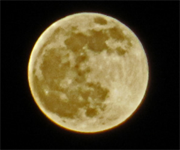

Gothic/Romantic Photographs
Dianne Kellogg is an Ohio native who married a “country boy.” She has spent the last forty-eight years in Ohio’s rural northeast snowbelt. Her photographic philosophy can be summarised as follows: “‘The best camera is the one you have with you,’ and now that the world is armed with smart phones, photography has exploded. I stop my car and pull over on a regular basis – what used to be the shot that got away is now recorded! I am always looking for great contrast, a leading line that moves the eye, balance or more exactly “off balance” and enough negative space to make it interesting.”
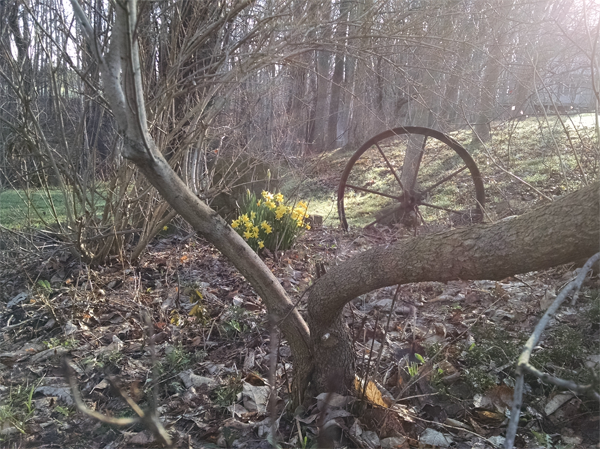
Spring Wheel by Dianne Kellogg, photograph, 2015
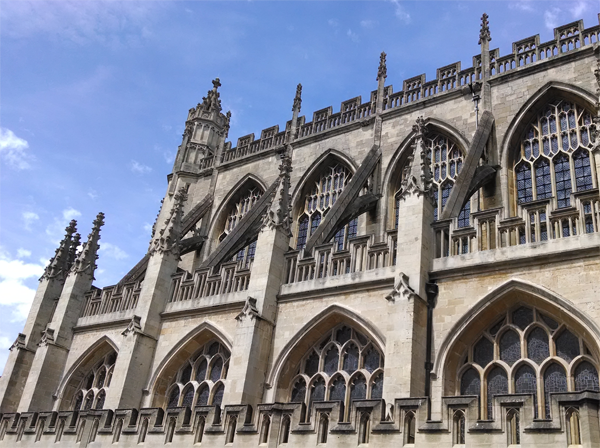
Bath Abbey by Dianne Kellogg, photograph, 2014

Storm at the Courthouse by Dianne Kellogg, photograph, 2015

Graveyard at Sunrise by Dianne Kellogg, photograph, 2014
Labyrinth
by Pat Seman
The thread of the story has unwound,
this red trail
that follows him into darkness.
The earth shakes and roars,
already the hole is opening
into a deeper sorrow.
The creature rules me, draws me
every night into its dreams,
the warm lair, the crescent moon
horns shining.
The thread is drawing me out, stretching me,
as it unreels, the more my life unravels, the green
and sheltered gardens collapse behind me.
I am no more than a long ache.
DNA Knows Best
by Marvin R. Hiemstra
Late 1960s I met Medusa: love at first sight. All low
tech and playing in a waterfall, she wore a halo
of her snakes’ number one favorite, anchovy/cheesy
bits. That girl could twist it. What a dance partner!
Faux Medusa I just met spits forked-tongue poems:
her words do a Bette Davis before breakfast hiss!
I miss the snakes: they had rhythm. This Medusa’s
poems blog where it hurts the most. Sangria helps.
Never click on a poem that bites you, wiggles its tail,
slithers off. Web is a word pit. Don’t be an ass like Eve.
If deceived, stand on your head and grin like crazy. Then
go to www.pegasusdna.ouch: tie one on, tackle an epic.
AQ13 Summer 2015 Book Reviews
by Bryan R. Monte
Einde verhaal/End of Story by Philibert Schogt, Arbeiderspers, ISBN 978-90-295-3903-6, 2015, 344 pages.
Poor Advice by Lou Gaglia. Spring Up Mountain Press, ISBN 978-0-9863490-0-3, 2015, 216 pages.
The Best Women’s Travel Writing (vol. 10) edited by Lavinia Spalding. Travelers Tales, ISBN 978-1-60952-098-4, 2014, 305 pages.
This issue includes reviews of three books which I feel are guaranteed to provide AQ’s readers with enjoyable summer reading. The first is a novel, Einde verhaal/End of Story by Amsterdam’s Anglo-Dutch writer, Philibert Schogt. The second, Poor Advice, a collection of short stories by American writer, Lou Gaglia, and the third, The Best Women’s Travel Writing, Volume 10, a collection of women’s travel essays, edited by Lavinia Spalding.
Einde verhaal/End of Story is Schogt’s fifth novel, (the fourth published by the Arbeiderspers). It is the bilingual story of John or Johan Butler, an emigre Dutch-Canadian translator who lives in a little village just north of Amsterdam who is about to retire until he receives one last, controversial and potentially dangerous assignment. Butler, who has lived in the Netherlands for the last 20 years, receives the assignment to publish Tobey Quinn, a famous American novelist’s latest nover of the same title into Dutch. Since this novel contains a passage in which the God takes part in a celestial talent contest with Charles Darwin and the devil and loses, however, Quinn, Quinn’s publisher and ultimately Butler all receive death threats from a fundamentalist, Christian preacher—End of Story—end of you!” John/Johan Butler, nonetheless, translates the first chapter and when things heat up, travels back to Canada to his parents holiday camp, Butler’s Hideaway, near Algonquin Park for his own safety, to meet Quinn and to confront his Dutch-Canandian background which he abandoned twenty years previously when he decided to move to the Netherlands temporarily with his girlfriend Cindy for a year. After one year became two and two years two decades and John/Johan fell in love with and impregnated his publisher’s assistant for whom he was doing translation work, John/Johan’s stay finally became permanent.
But death threats and infidelity are just minor parts of this novel which is really about growing up bi-lingual and the type of cerebral and thus emotional attachment conflicts it creates. The protagonist is not one person but two—John in English and Johann in Dutch. And the novel is written in two languages—English to tell mostly John’s point of view and Dutch to reveal Johan’s. In addition, in the more epistolary English sense, John’s English part is told in the first person, whilst Johan’s more emotionally reserved Dutch part is told in the third person. As a result of this, the two parts of the story are not parallel. John tells much more about his sexual exploits on a secluded Canadian island with his high school girl friend who accompanies him to the Netherlands for 20 years, than his Dutch alter-ego ever does. Johan is also much more in love with his 20 year younger wife, his two daughters and his idyllic life in the village of Holysloot just North of Amsterdam, its back garden draped in apple blossoms, than his alter-ego John who writes his memoirs whilst Johan sleeps and who wants to return to Canada. It’s the death threat that finally tips the scales and enables John to drag Johan back to Canada to encounter the country where “they” both grew up which is now both familiar and foreign due to their 20 year absence. John/Johan also encounters many surprises towards the end of this story, which I will not give away, but which sustains the narrative suspense to the novel’s end.
This is a novel most bi- or polylingual writers, readers and artists will enjoy since its explains the cerebral bifurcation and emotional difficulties encountered by people raised in more than one culture and belonging wholly to none.
Lou Gaglia’s Poor Advice is a collection of humorous, entertaining short stories, set mostly in one of New York’s Italian-American neighbourhoods but occasionally branching out into other alternative settings. Due to his not-completely dependable narrators lack of education, however, they don’t always grasp the situations in which they find themselves. For example, the narrator in the title story goes to the opera alone after not being able to get up enough courage to ask a waitress out. He describes the interval of the opera as “half time” how he had trouble staying awake until:
Mimi went into one of those viscous coughing jags hacking up a storm while everyone, except the horses, looked on worried. Before she knew it, she was in bed dying, and the writer was bent over her, not even minding she was coughing in his face—a sure sign of true love when a girl can cough in a guy’s face and he doesn’t even flinch or get pissed.
Another interesting story is the surrealist “Tony, the Mustache,” during which a moustache is persistently worried about being shaved off because his wearer’s girlfriend doesn’t like the way he looks.
Tony lived in constant apprehension. As a result, he was a very jumpy mustache. He had horrible nightmares a few times a week, sometimes more….Tony could be described as a nervous wreck of a mustache, though his master would only refer to him as “this stupid mustache,” which sometimes left Tony depressed for days.
This narrative is even more interesting because not only does this moustache have consciousness, but it is also is able to talk to other moustaches it passes on the street.
“You look a little down in the bristles, Tone.” Ray said.
“I am.”
“Thinking about being shaved again?”
“What else?”
“Look. I told you. Stop reading that Satre.”
“I can’t help it. Anthony’s reading Being and Nothingness.
“You don’t have to read it. Curl your hairs.”
Although, many of these stories are satirical and/or humorous such as “Orca (A Madcap Thriller)” a satire of Jaws and “Days of Wine and Pratfalls,” about a waitress who infects her boyfriend with her clumbsiness as she learns to be graceful by practicing yoga, some stories such as “Little Leagues” and “This is my Montauk” delve into serious subjects such as the long-term effects of bullying and drugs in their narrators’ neighbourhoods. Both of these stories, due to their realism and candor are worth the sum of all the humour and entertainment in this book. Poor Advice is a fine, well-balanced, collection of short stories and comes with “A Reader’s Guide,” which could facilitate discussion of this book in secondary and tertiary educational settings. It is certainly one that will not disappoint recreational or academic readers.
The last book for the summer that I would like to recommend is Lavinia Spaulding’s The Best Women’s Travel Writing, Volume 10. I spent about a month reading one of these thirty-one travel vignettes each night before I went to sleep and enjoyed learning about travel and cultures from the Arctic “For the Sake of the Sin” (Norway) by Blare Braveman, and “Leader of the Pack” (Finland) by Peggy Orenstein to the tropics “Good is Coming” (India) by Angela Long, “Ashes over Havana” (Cuba) by Magda Montiel Davis and “Why did the American Cross the Road” (Vietnam) by Sarah Katin and the writers who describe the many countries in-between.
Many of these journeys are made by women with various goals in mind. Some are on errands, such as Davis in “Ashes over Havana,” where she first describes her frustration trying to get her father’s ashes back into the country he fled after the Cuba revolution and later trying to fulfill his wish to be strewn on the playing field of Havana’s baseball stadium. Due to the guards at the stadium’s entrance however, Magda decides to covertly deposit her father’s ashes outside of the stadium with an old friend, Ive, who has remained in Cuba since their childhood. Later at Havana’s seawall, she throws the last of her father’s ashes into the sea that separates Havana and Miami. But the ashes
…fly back inland, toward a pretty girl with brown skin kissing her boyfriend, a pretty brown girl now covered with my father’s ashes. Ive and I stare at each other. Ay, I say to the pretty brown girl’s boyfriend as he wipes the white off her face, her hair, her blouse, pernonanos. It’s O.K. he say, pronounced O-kah, the anti-imperalista, Revolutionary way…That’s O.K. I say….Dad’s happy going home with her tonight. He always liked brown-skinned girls best.
Other stories include accounts of women’s journeys made despite recent medical traumas or hardships and/or on-going disabilities. For example in “An Unwanted Guest” (Indonesia), Simone Girrindo describes not only the toll hiking through a Javan rainforest and a accidently stepping on a jelly fish took on her journey and her relationship, but also the added effect her chronic medical condition had on her own health and her relationship.
At home, my condition and his abilities had, somewhat magically, never been at odds, but here, the difference seemed stark and divisive. He belonged to the land of the healthy, where people move easily, their arms and legs vehicles that get them where they want to go. And I was on another island entirely, a place that, no matter how many times I circled it, offered no way off.
Many of the other stories in this collection describe women pushing themselves to their physical limits to discover and/or reclaim their bodies’ strength and resilience. This writing is also accompanied by a keen eye for the history and the culture of the people among which they are living. It is an excellent collection of travel essays, not only for women but also for men who want to share these women’s insights of their travels in different parts of the world.
A Dark Answer to Lilac
by Abra Bertman
Now my neighbour’s field is grey with it.
I squeeze a few. Lavender on the far side of summer
is the dark answer to lilac, a hold-tight to frost,
the smell of listmaking before the snow.
The year’s inventory starts with an eye
narrowed to wet smoke caught in trees,
the smudge of partial-drowning, the thorn of near-love,
mist pooling in banks when the sun wants to rise.
Topcoat. Flint. We catalogue the shadows
given to idea. The soft bees shoring
up dangerous honey, now curling in dry nests
of damp leaves, know it is almost winter.
I’ve stopped your voice at the water
I used all summer as a glass for eagerness and breath,
but you’ve been here all year and will live through the ice
that crazes the lake’s wide edge with silence.
I crack your image with a rock and a cold black dye appears.
The moving, singing pond shudders and forgets
the many early stories that are home to stone. I miss you again
and again in the white afternoon. I miss you into night.
Why I Broke Up with You and You and You….
by Bryan R. Monte
You wanted to add a third on our fourth date.
You called out someone else’s name during sex…and while you slept.
You only called when you’d gone through everyone else in your book.
You had a syringe in your cupboard drawer and weren’t a diabetic.
You didn’t ask if you could smoke in my bed.
You shouted: “We’re all antibody positive!”
You had sex—by accident—with three men in one afternoon.
You never wanted to get married or wear a ring.
You wouldn’t wear a condom because it killed the feeling.
You thought sex in the park was OK as long as I didn’t know.
You hooked a man on the beach on holiday, but didn’t let him go.
You left love letters on your nightstand—from another beau.
You said you could never fall in love with a renter.
You said you wouldn’t date a man clothed by Marks & Spencer.
You said we should “start seeing other men” after I spent a week moving you in.
You demanded I quit my second job so we could stay out late Saturday evenings.
You said I talked too much.
You said I asked too many questions.
You were frightened by the wall of books as you walked into my flat.
You only wanted sex when I had to go to class.
You said you loved me, but wouldn’t move with me back East when I won the scholarship.
You said you loved me, but wouldn’t move with me out West when I graduated.
(Even though both your employers had offices in both places).
You didn’t take me home for Thanksgiving, Christmas or New Year’s.
You left me at home on Thanksgiving, Christmas or New Year’s.
You said if I left you, I’d never find anyone who loved me as much.
But honey, none of you had the right touch.
Skylining
by Changming Yuan
Golden teeth glistening
In the mouth of the city
Silver clouds colliding
At the tongue tip of day
Bite off all darkness
They whisper
And chew the season well.
After Midnight
by Charles Southerland
When evening comes, his alter ego blooms.
He stews about the evil that surrounds
the neighborhood, the soulless hatch from wombs
attuned to such debauchery. He pounds
both fists against his head to tenderize
his mind. Why does it have to be this way?
No cape can cover all of it. He flies
against the night and lands amidst the fray.
When morning comes, there is some pain, a cut,
contusions, a bullet wound, bloody sheets,
the ever present migraine headache, but
no memory of the night just passed, his feats.
There’s flab, gray hair— he’s become a softie.
Lois asks, “Clark, want a cup of coffee?”
The New Verona Commentary
by Charles Southerland
Some Italian boy threw his flashlight through
a window, breaking the leaded frescoed
pane. The debutante took it as her cue
to fall in love, her penthouse life co-ed
forever, which is the long way to say
they were two horny kids ready to screw-
up after reading “Fifty Shades of Grey.”
She found the book in her parents room; who
could blame them much? More? The dog-eared pages
were underlined, (and sticky too.) She missed
the closet full of toys, the iron cages,
videos in alphabetic rows, lists….
It understates the thought: forbidden love—
‘neath Mother’s pillow hides a rubber glove.